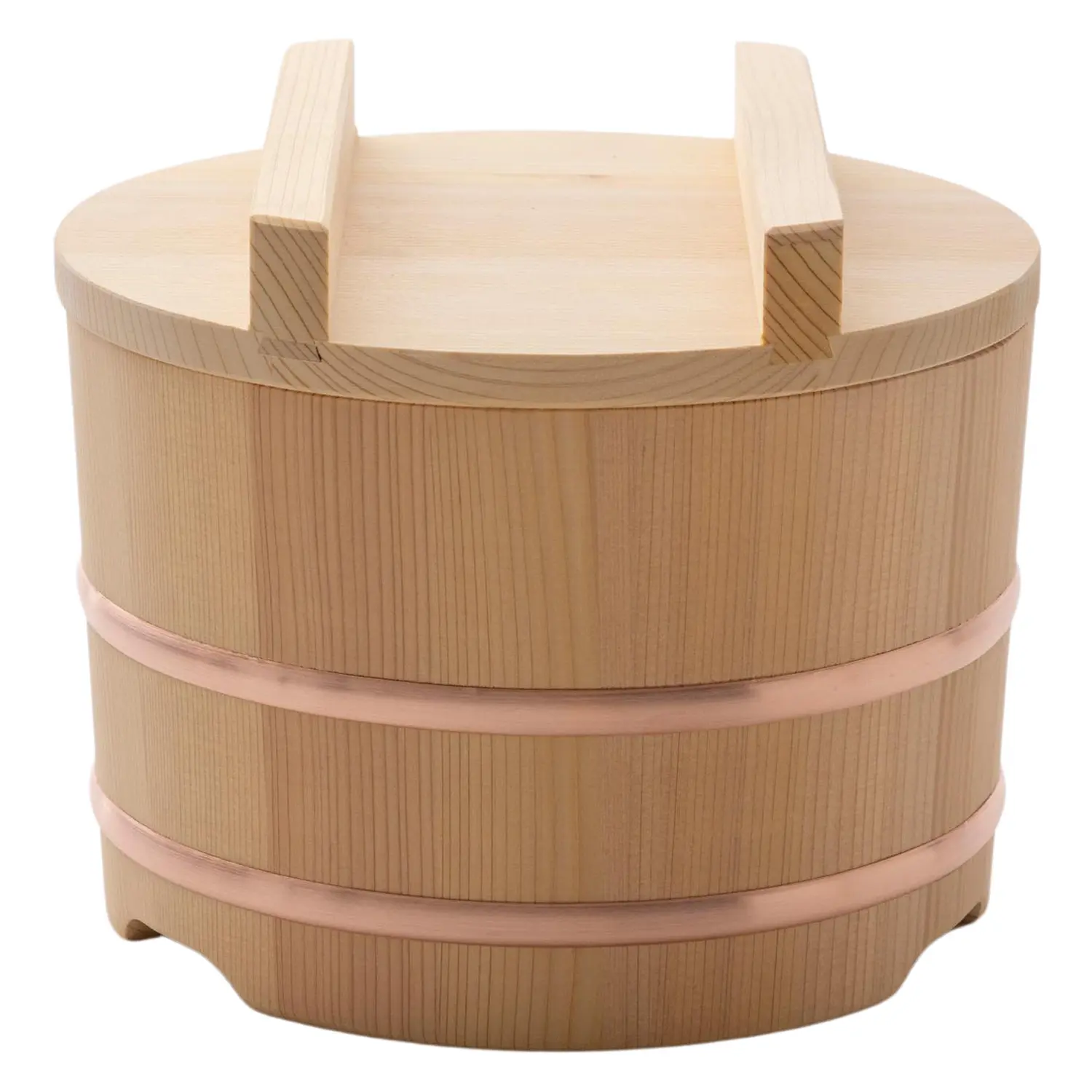
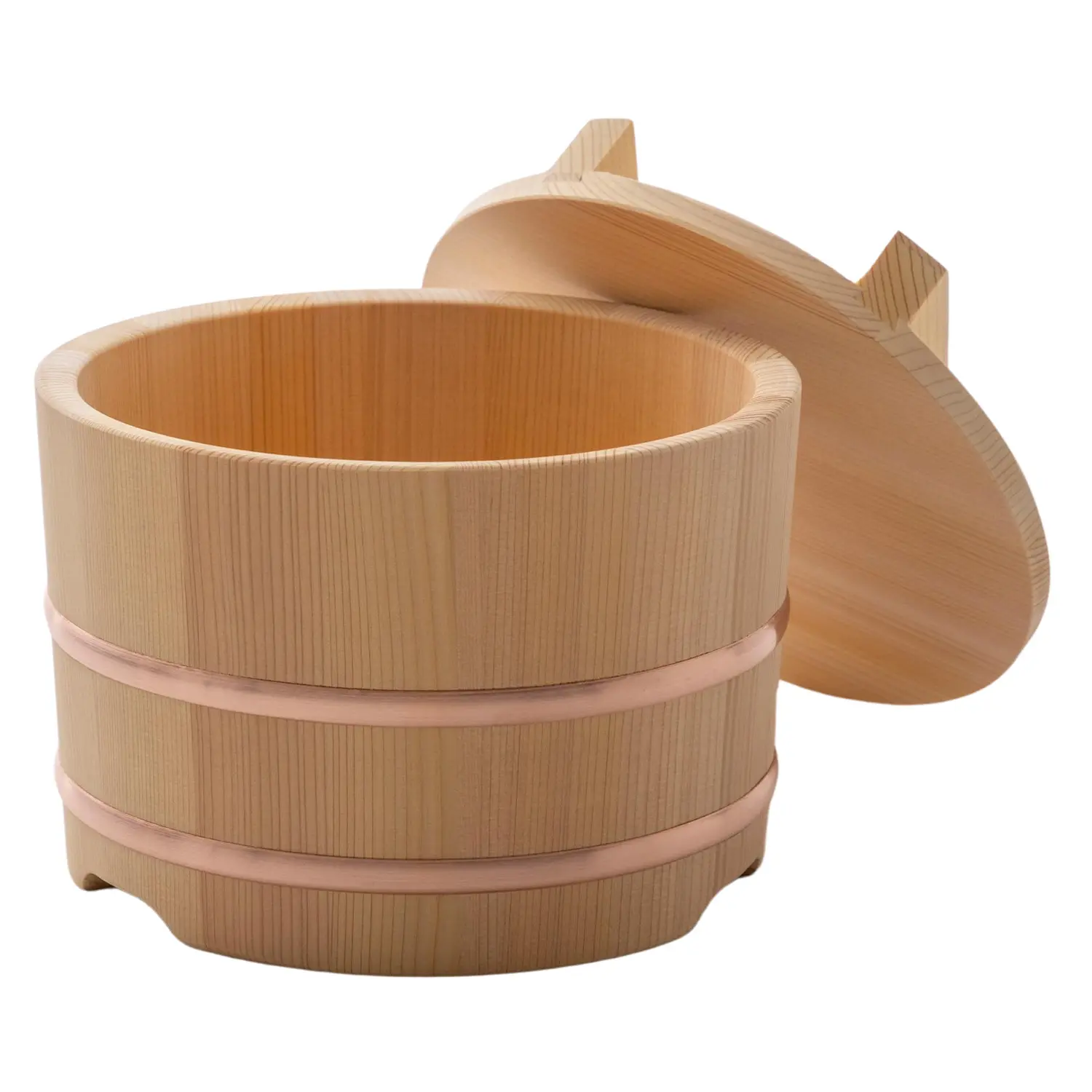
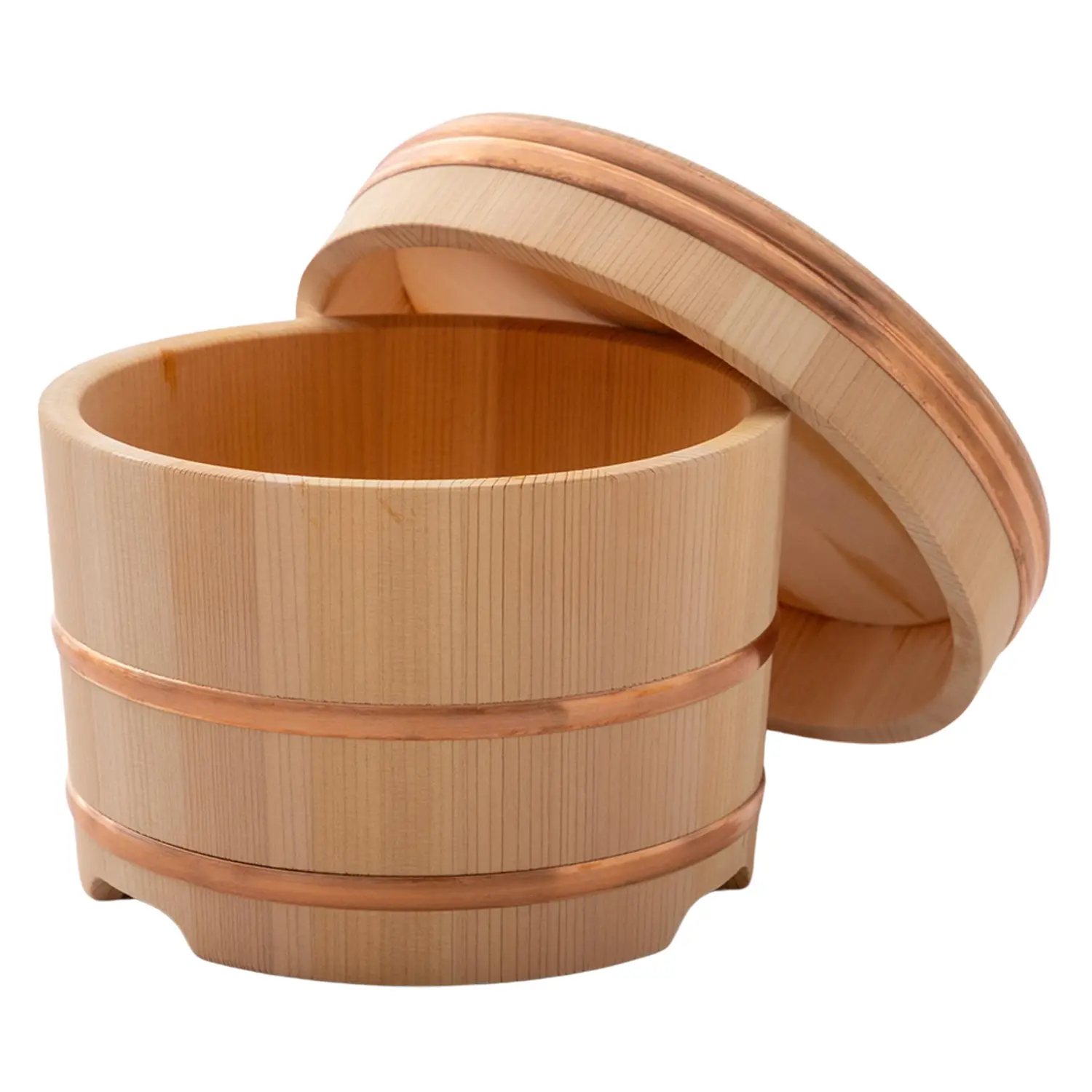
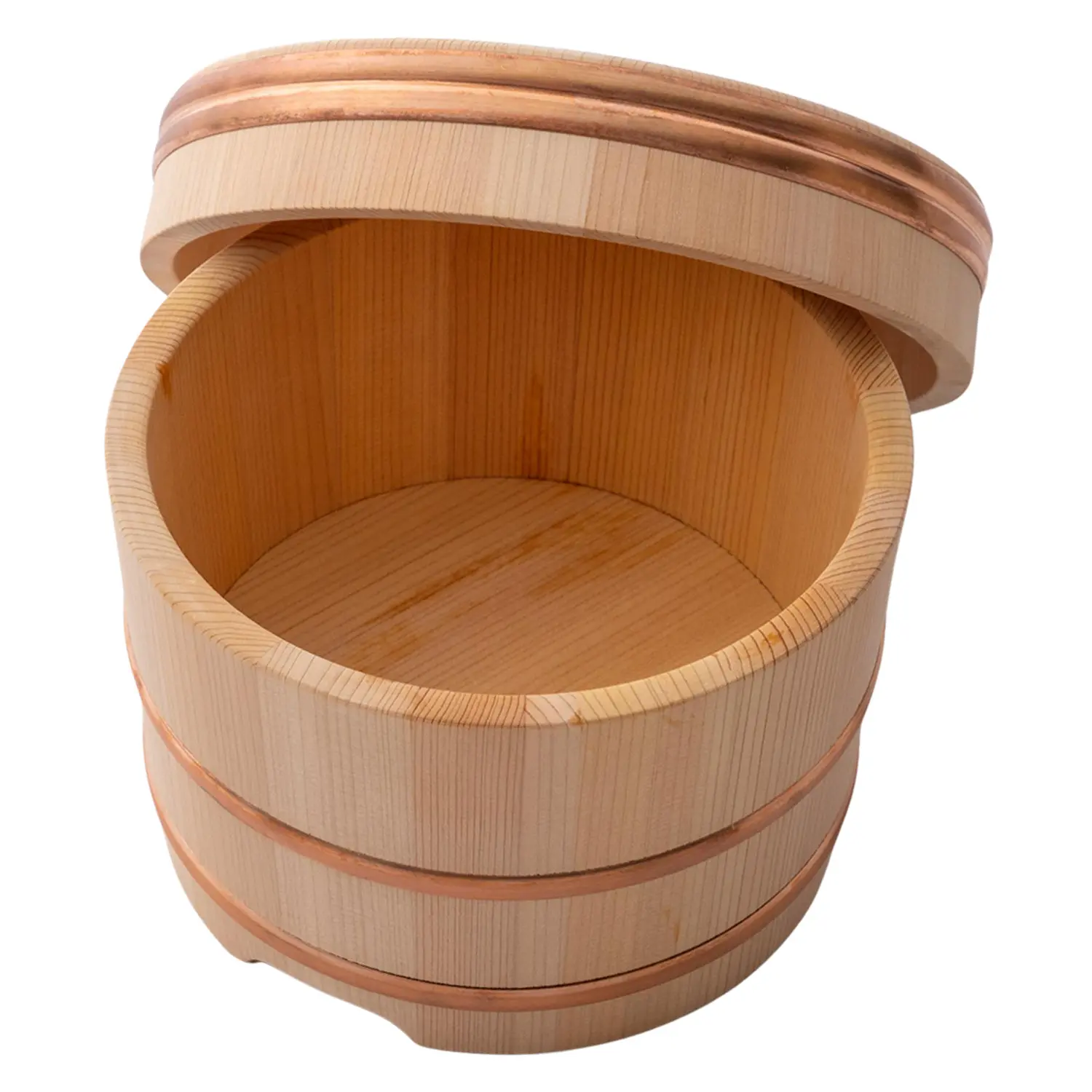
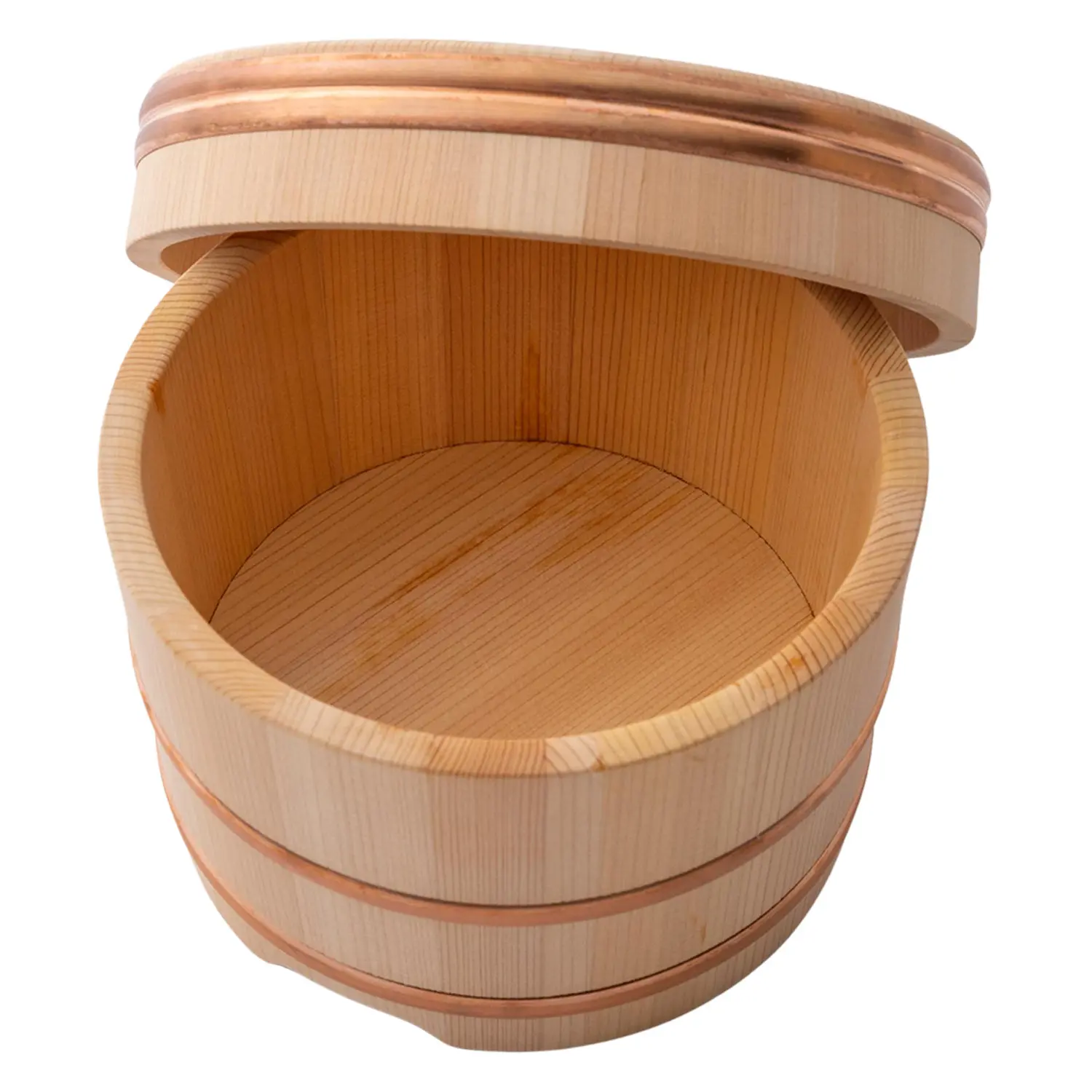
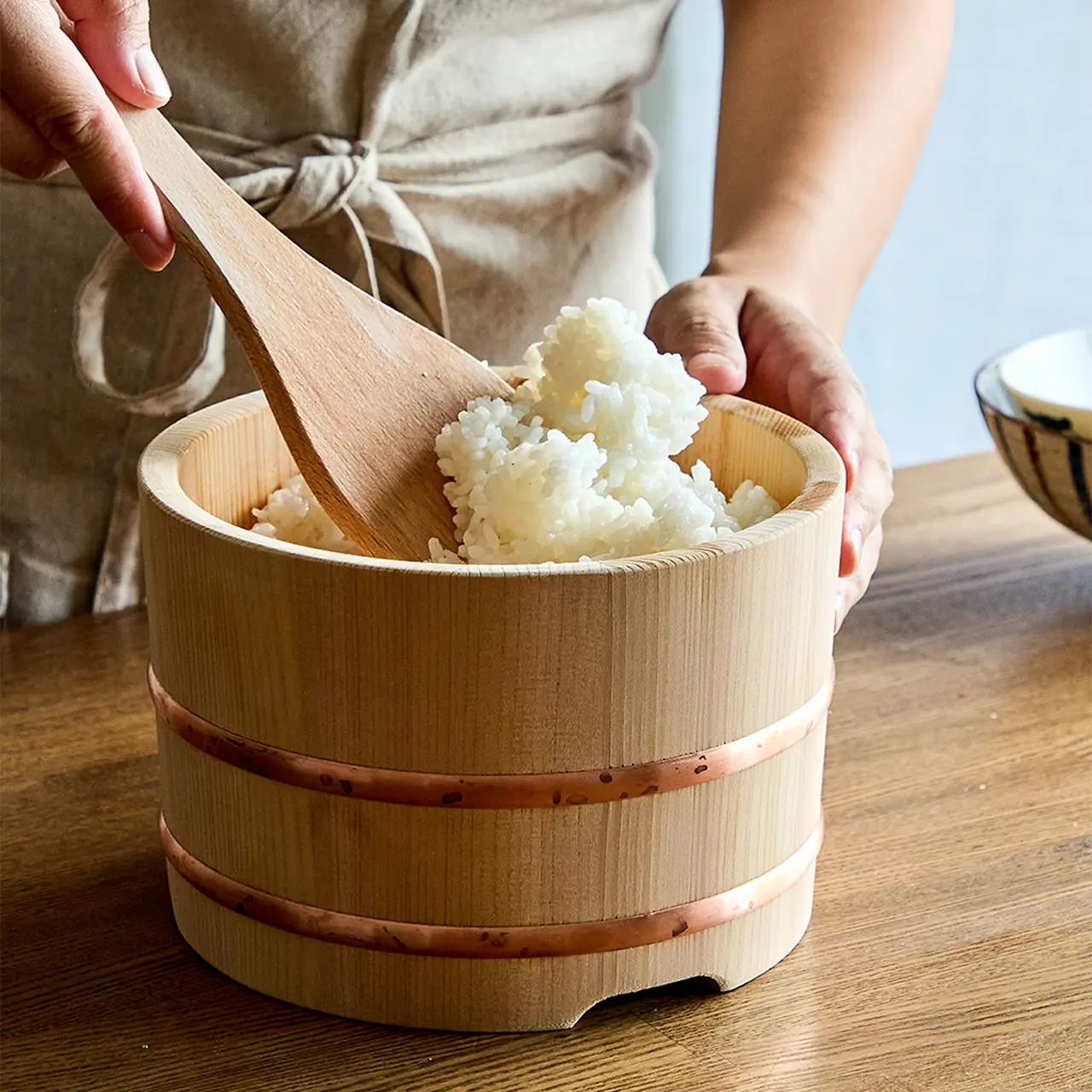
Yamacoh Ohitsu Sawara Wooden Rice Container (Edobitsu)
Product Information
- Brand:Yamacoh
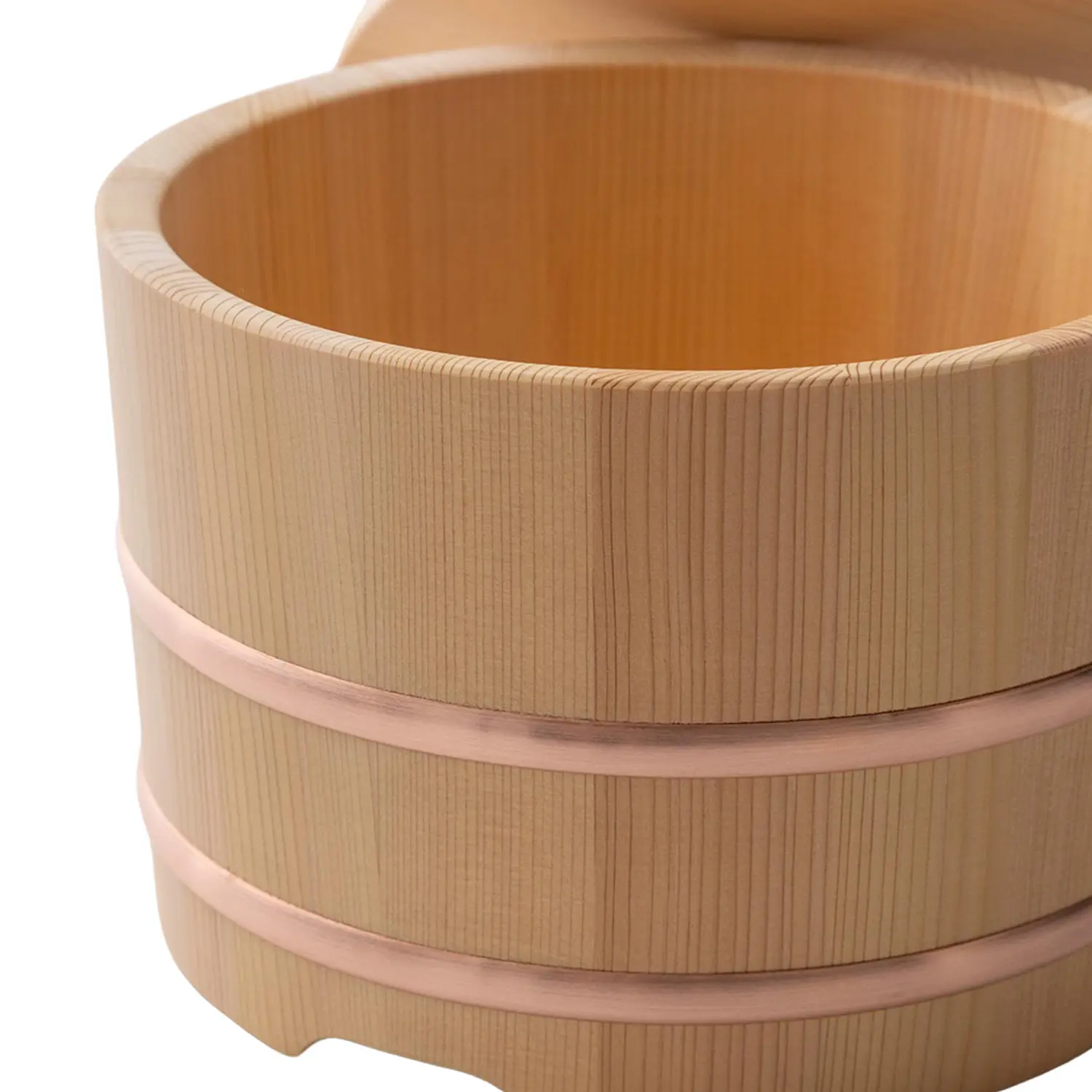
- Material:Body: Natural wood (Sawara cypress), Bands: Copper
- Product type:Food Containers
- Country of origin:Nagano, Japan
- 18 cm:Dimensions (approx): Diameter: φ18 x H12.5 cm, Capacity (approx): 630 ml, Item weight (approx): 600 g, Shipping weight (approx): 1000 g
- 21 cm:Dimensions (approx): Diameter: φ21 x H14 cm, Capacity (approx): 900 ml, Item weight (approx): 800 g, Shipping weight (approx): 1200 g
- 24 cm:Dimensions (approx): Diameter: φ24 x H15.5 cm, Capacity (approx): 1260 ml, Item weight (approx): 1000 g, Shipping weight (approx): 1400 g
- 27 cm:Dimensions (approx): Diameter: φ27 x H17 cm, Capacity (approx): 1800 ml, Item weight (approx): 1300 g, Shipping weight (approx): 2060 g
- 30 cm:Dimensions (approx): Diameter: φ30 x H18.5 cm, Capacity (approx): 2700 ml, Item weight (approx): 1600 g, Shipping weight (approx): 2360 g
- 33 cm:Dimensions (approx): Diameter: φ33 x H22.5 cm, Capacity (approx): 3610 ml, Item weight (approx): 2200 g, Shipping weight (approx): 2960 g
- 36 cm:Dimensions (approx): Diameter: φ36 x H24.6 cm, Capacity (approx): 5410 ml, Item weight (approx): 2800 g, Shipping weight (approx): 4110 g
- 39 cm:Dimensions (approx): Diameter: φ39 x H27.6 cm, Capacity (approx): 7220 ml, Item weight (approx): 3500 g, Shipping weight (approx): 4810 g
- 42 cm:Dimensions (approx): Diameter: φ42 x H30.6 cm, Capacity (approx): 9020 ml, Item weight (approx): 4000 g, Shipping weight (approx): 5310 g
Key Features
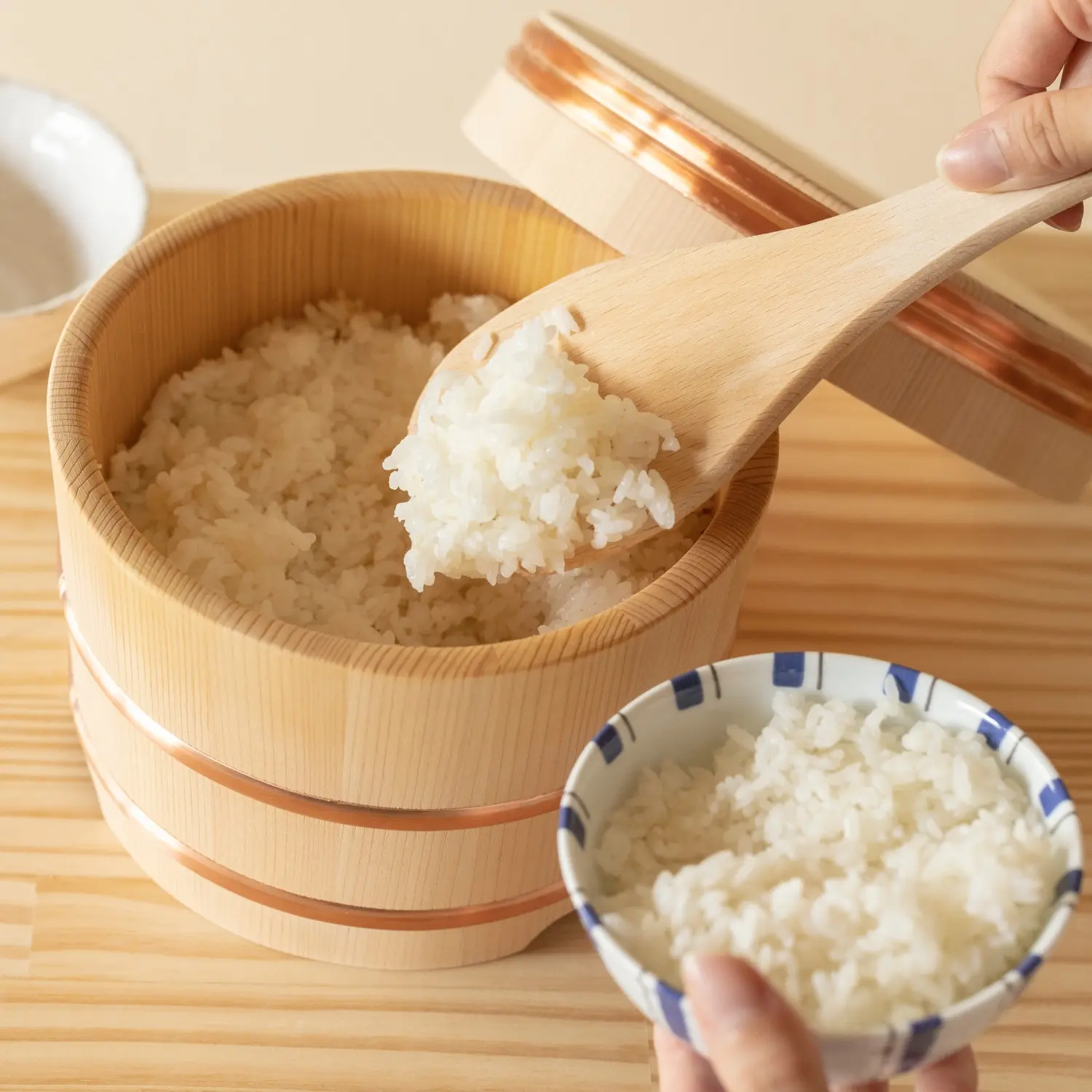
- The “Ohitsu” is a wooden rice container with a lid, traditionally used to keep freshly steamed rice in perfect condition after cooking. Its natural material absorbs excess moisture, leaving the rice light, soft, and well-textured.
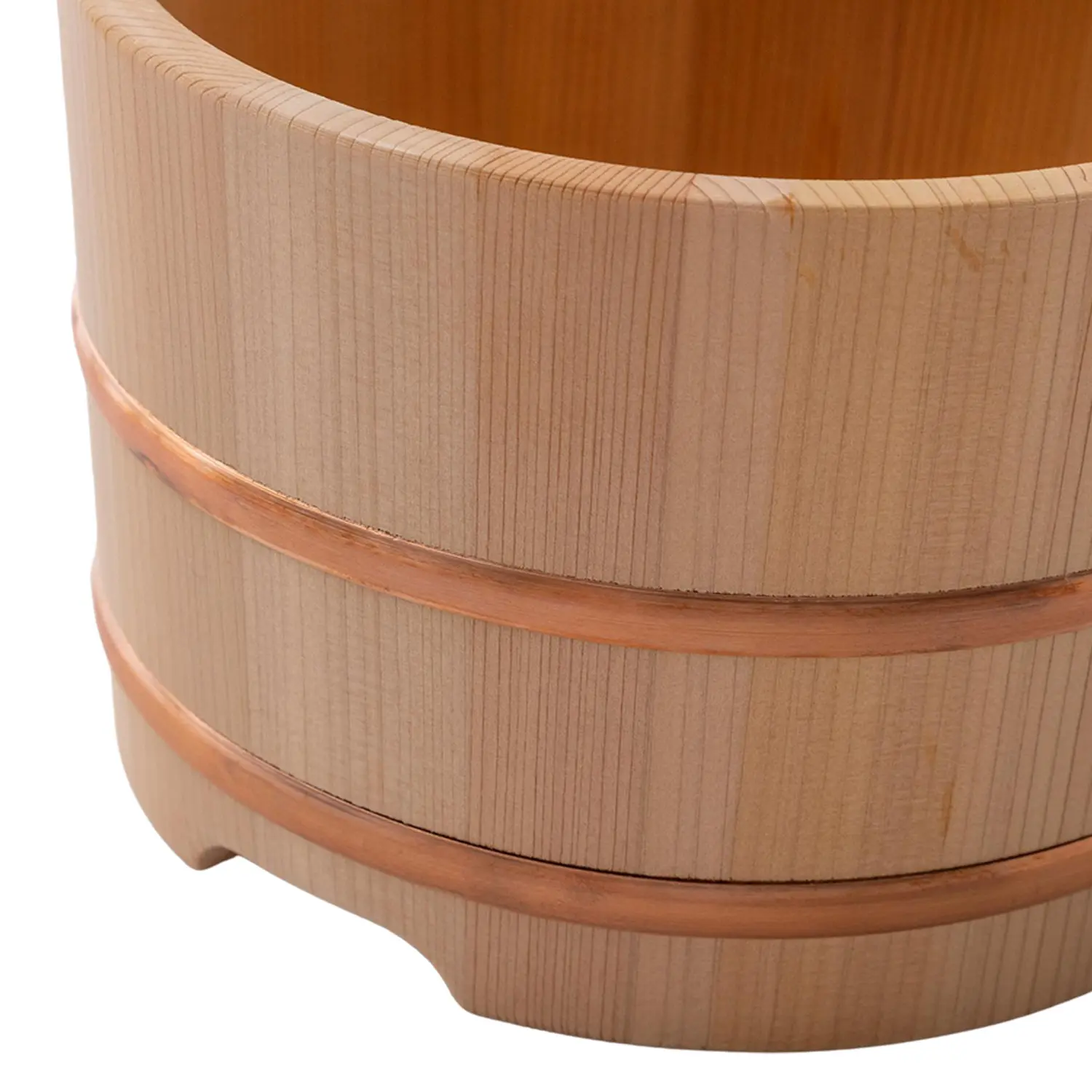
- This container is handcrafted from Sawara wood, a prized material from the Kiso region, using traditional techniques passed down through generations. Its elegant straight-grain (Masame) pattern and refined copper fittings lend it a timeless sophistication. For centuries, Sawara has been valued in Japan for crafting essential kitchen tools such as Hangiri (Handai) and Ohitsu, earning a lasting reputation for both beauty and durability.
- With its naturally high resin content, Sawara wood stands apart from other species for its excellent water resistance and longevity. These qualities, along with its natural antibacterial properties, make it a trusted material for traditional Japanese kitchen tools.
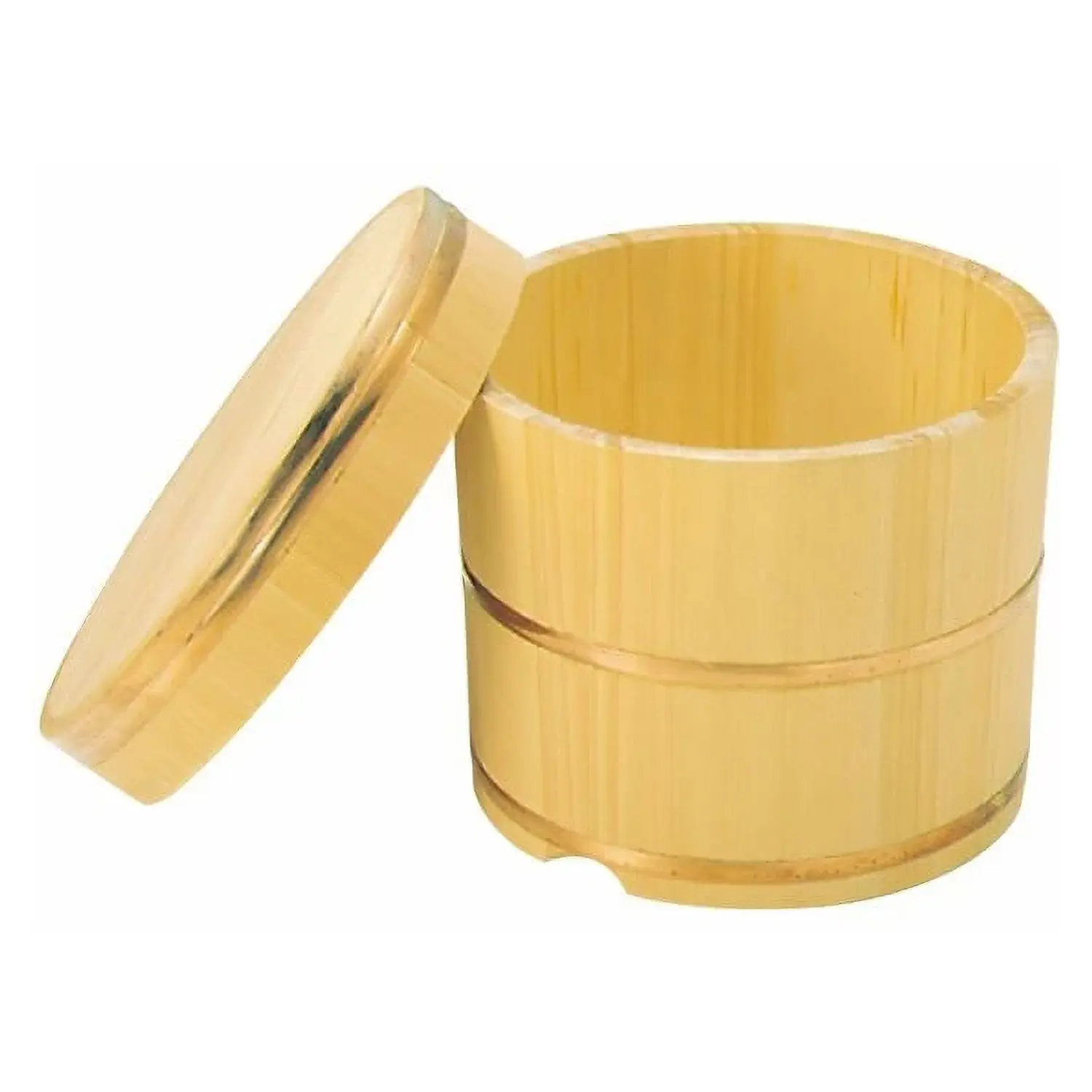
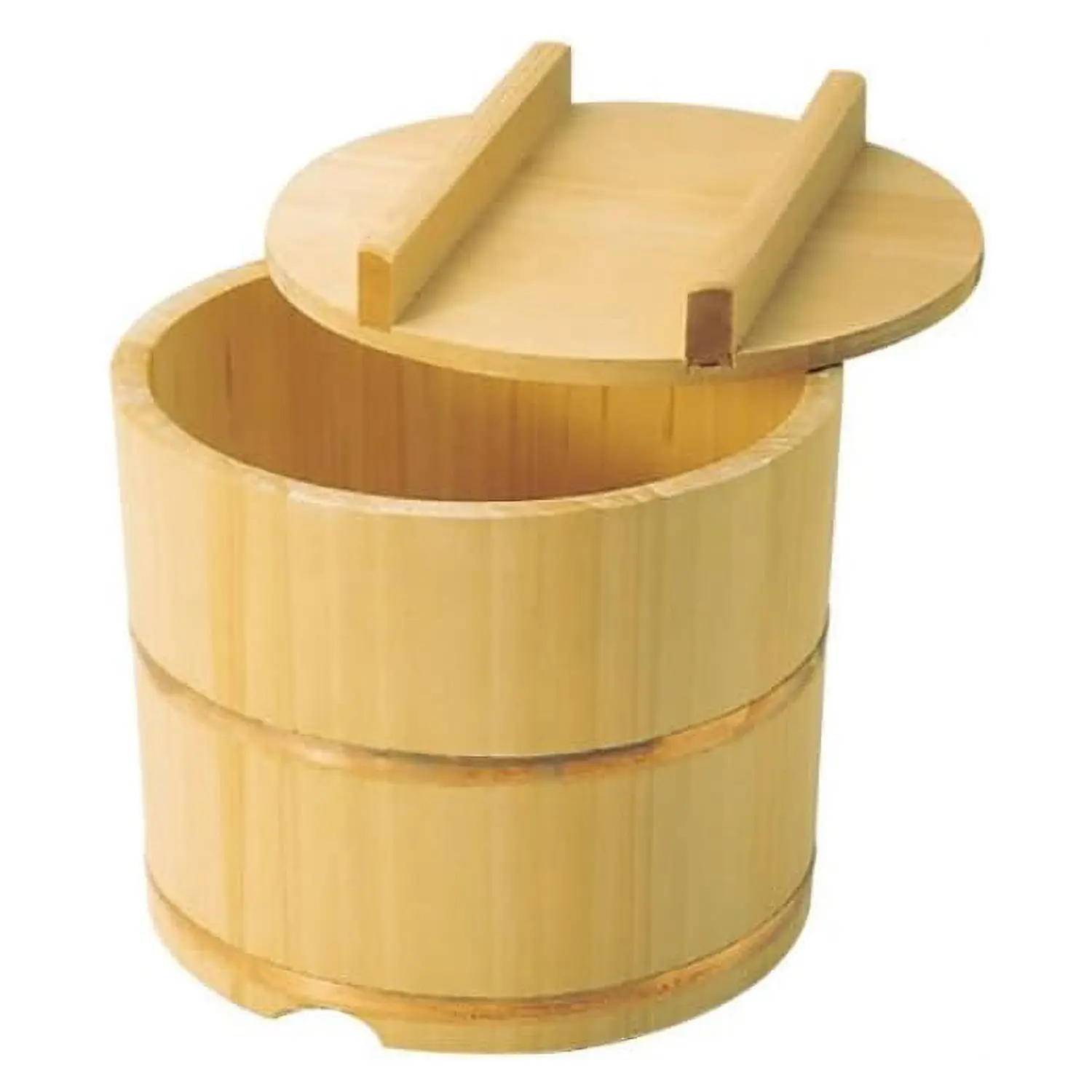
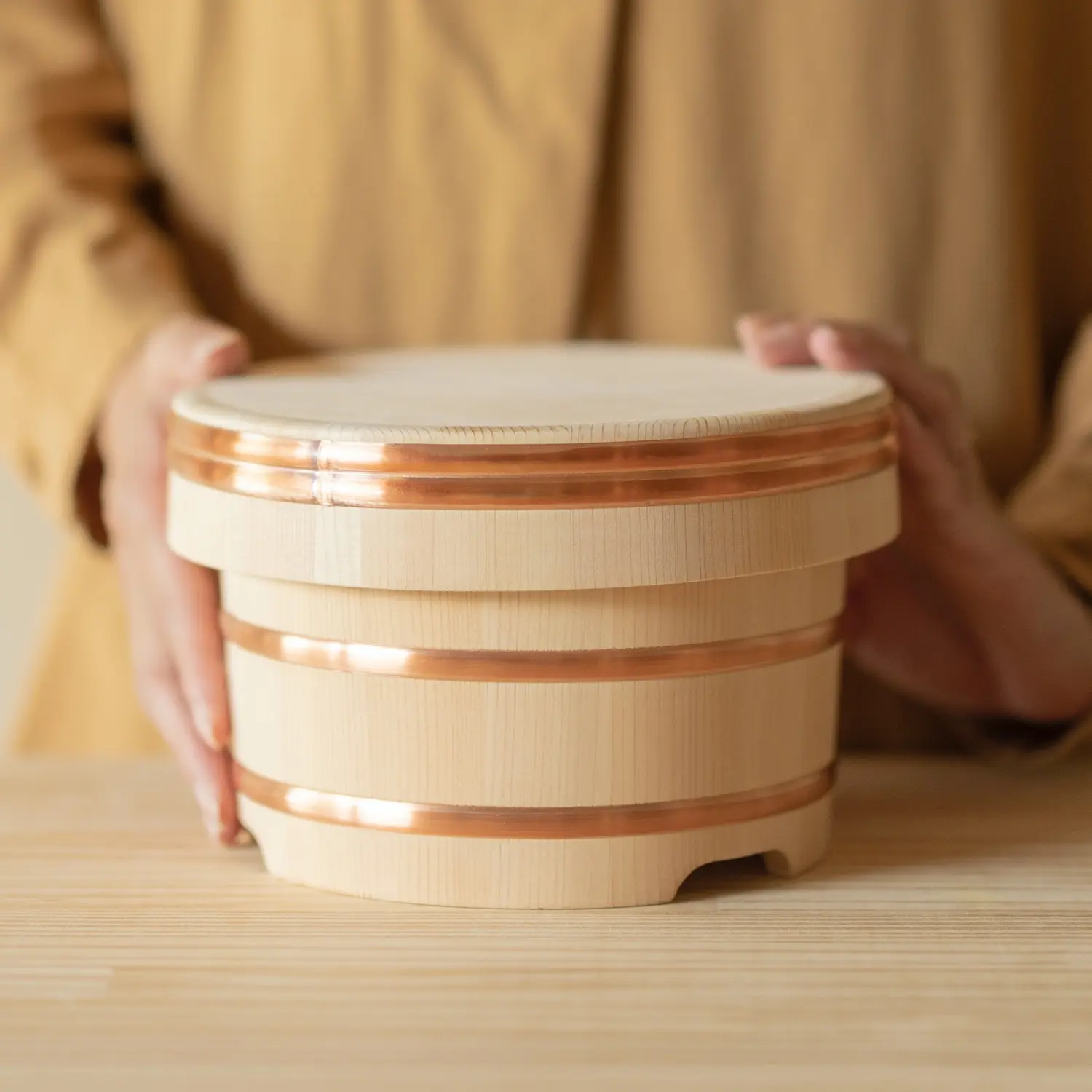
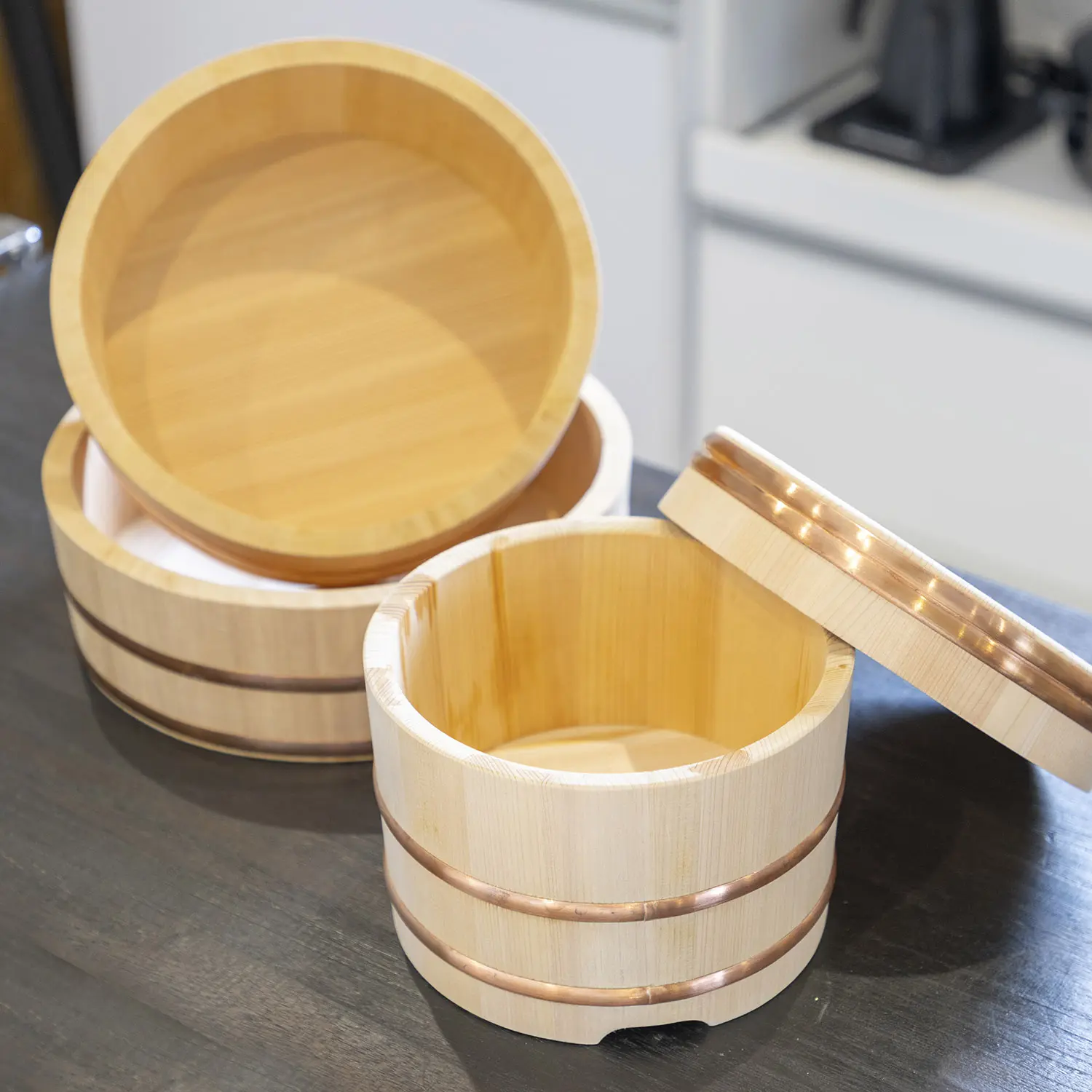
- “Edobitsu” and “Nosebitsu” are variations of the traditional Ohitsu, mainly distinguished by the shape of the lid.
Use & Care
- Resin may occasionally seep to the surface. This is a natural substance and is completely harmless, even though its yellowish, sticky, stain-like appearance might be misleading. Wiping it with vinegar or ethanol (sterilizing alcohol) will remove the stickiness. While some yellow discoloration might remain, it poses no safety concerns and does not affect use.
- After use, wash the container thoroughly with hot water to remove any food residue, as this can cause black stains. Once washed, drain well, wipe with a dry cloth, and let it dry in a cool, well-ventilated area away from direct sunlight. If left to dry without wiping off excess moisture, the wood may shrink, leading to cracks and loosening the copper fittings. Extended dampness also speeds up mold growth and black stains.
- Do not wash in a dishwasher.
Background
Yamacoh Co., Ltd. was founded in 1972 in Nakatsugawa, Gifu, Japan, which used to be a post town between Edo (Tokyo) and Kyoto during the Edo period (1603–1868).
Select Size
From $0.21
Original: $0.59
-64%Yamacoh Ohitsu Sawara Wooden Rice Container (Edobitsu)—
$0.59
$0.21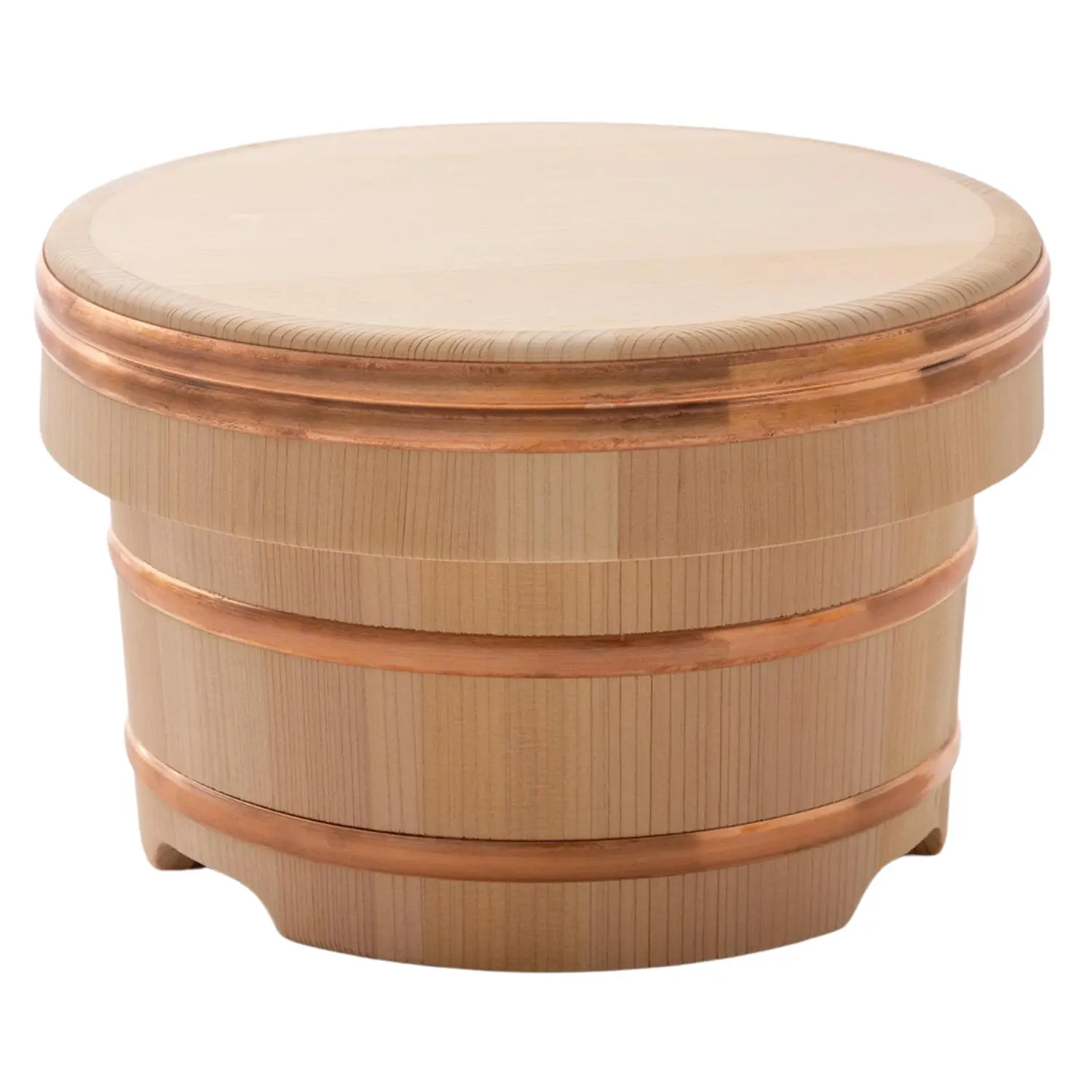
Description
Product Information
- Brand:Yamacoh
- Material:Body: Natural wood (Sawara cypress), Bands: Copper
- Product type:Food Containers
- Country of origin:Nagano, Japan
- 18 cm:Dimensions (approx): Diameter: φ18 x H12.5 cm, Capacity (approx): 630 ml, Item weight (approx): 600 g, Shipping weight (approx): 1000 g
- 21 cm:Dimensions (approx): Diameter: φ21 x H14 cm, Capacity (approx): 900 ml, Item weight (approx): 800 g, Shipping weight (approx): 1200 g
- 24 cm:Dimensions (approx): Diameter: φ24 x H15.5 cm, Capacity (approx): 1260 ml, Item weight (approx): 1000 g, Shipping weight (approx): 1400 g
- 27 cm:Dimensions (approx): Diameter: φ27 x H17 cm, Capacity (approx): 1800 ml, Item weight (approx): 1300 g, Shipping weight (approx): 2060 g
- 30 cm:Dimensions (approx): Diameter: φ30 x H18.5 cm, Capacity (approx): 2700 ml, Item weight (approx): 1600 g, Shipping weight (approx): 2360 g
- 33 cm:Dimensions (approx): Diameter: φ33 x H22.5 cm, Capacity (approx): 3610 ml, Item weight (approx): 2200 g, Shipping weight (approx): 2960 g
- 36 cm:Dimensions (approx): Diameter: φ36 x H24.6 cm, Capacity (approx): 5410 ml, Item weight (approx): 2800 g, Shipping weight (approx): 4110 g
- 39 cm:Dimensions (approx): Diameter: φ39 x H27.6 cm, Capacity (approx): 7220 ml, Item weight (approx): 3500 g, Shipping weight (approx): 4810 g
- 42 cm:Dimensions (approx): Diameter: φ42 x H30.6 cm, Capacity (approx): 9020 ml, Item weight (approx): 4000 g, Shipping weight (approx): 5310 g
Key Features
- The “Ohitsu” is a wooden rice container with a lid, traditionally used to keep freshly steamed rice in perfect condition after cooking. Its natural material absorbs excess moisture, leaving the rice light, soft, and well-textured.
- This container is handcrafted from Sawara wood, a prized material from the Kiso region, using traditional techniques passed down through generations. Its elegant straight-grain (Masame) pattern and refined copper fittings lend it a timeless sophistication. For centuries, Sawara has been valued in Japan for crafting essential kitchen tools such as Hangiri (Handai) and Ohitsu, earning a lasting reputation for both beauty and durability.
- With its naturally high resin content, Sawara wood stands apart from other species for its excellent water resistance and longevity. These qualities, along with its natural antibacterial properties, make it a trusted material for traditional Japanese kitchen tools.
- “Edobitsu” and “Nosebitsu” are variations of the traditional Ohitsu, mainly distinguished by the shape of the lid.
Use & Care
- Resin may occasionally seep to the surface. This is a natural substance and is completely harmless, even though its yellowish, sticky, stain-like appearance might be misleading. Wiping it with vinegar or ethanol (sterilizing alcohol) will remove the stickiness. While some yellow discoloration might remain, it poses no safety concerns and does not affect use.
- After use, wash the container thoroughly with hot water to remove any food residue, as this can cause black stains. Once washed, drain well, wipe with a dry cloth, and let it dry in a cool, well-ventilated area away from direct sunlight. If left to dry without wiping off excess moisture, the wood may shrink, leading to cracks and loosening the copper fittings. Extended dampness also speeds up mold growth and black stains.
- Do not wash in a dishwasher.
Background
Yamacoh Co., Ltd. was founded in 1972 in Nakatsugawa, Gifu, Japan, which used to be a post town between Edo (Tokyo) and Kyoto during the Edo period (1603–1868).